OpenAI Integrates Health Data into ChatGPT: What Developers Need to Know
OpenAI now allows U.S. users to link Apple Health data and medical records into ChatGPT for personalized insights. For developers, this means health apps face new competition, privacy considerations intensify, and the pattern of integrating real-world data into chat becomes a benchmark. This shift signals a move toward vertical-specific AI tools that may challenge existing products.
OpenAI Integrates Health Data into ChatGPT: What Developers Need to Know
As of this week, U.S. users who meet eligibility criteria can link their Apple Health data and medical records into ChatGPT. The feature, inside the Health section of the app, promises "more personalized insights" for the user. For a pragmatic engineer wondering how this affects the code you're deploying tomorrow, here is the relevant information.
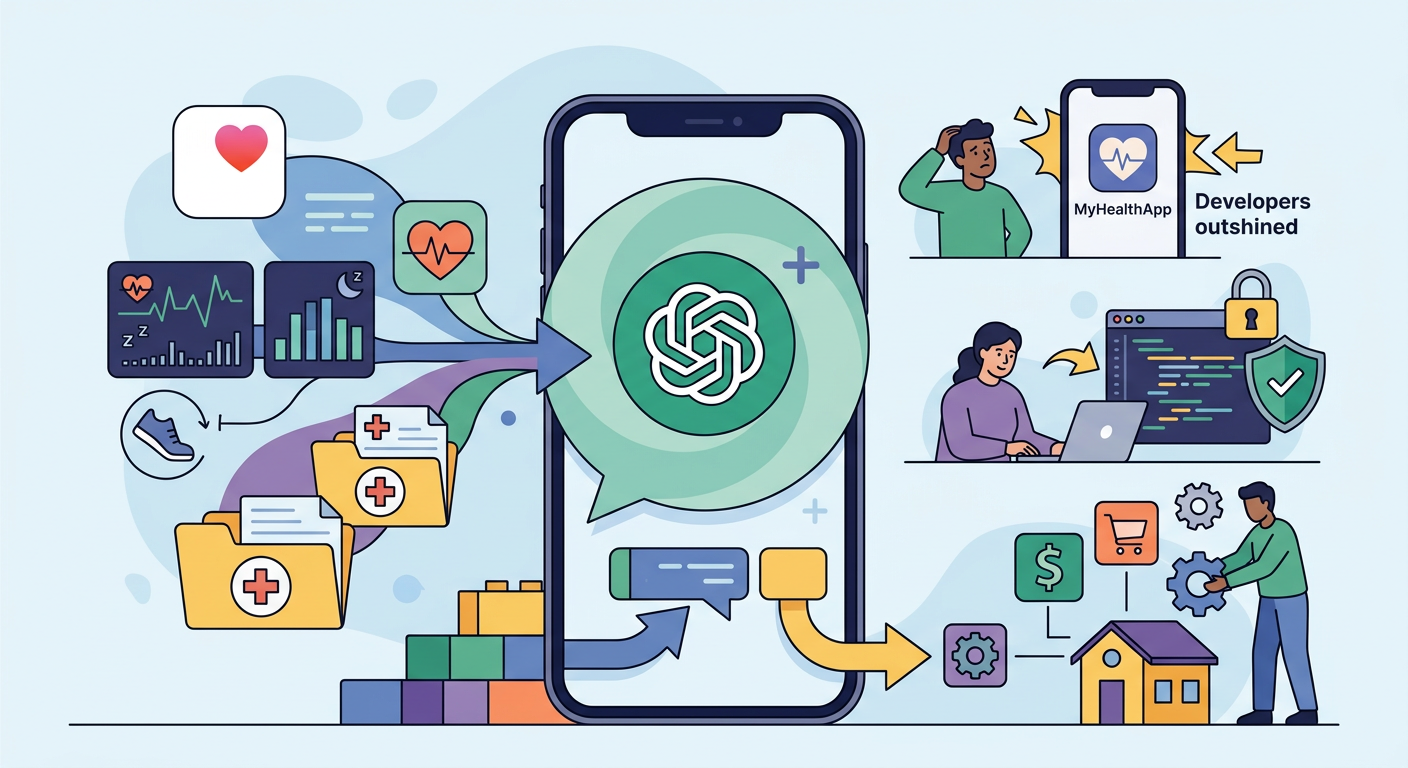
First, the mechanics. ChatGPT taps into two data sources: Apple Health (step count, sleep, heart rate data) and electronic medical records (likely via FHIR APIs or a similar standard). This is an extension of the existing ChatGPT interface, not a new app. Users who previously pasted a blood test PDF and asked for interpretation can now do that without manual upload—if they consent.
What changes for a developer? Several things, depending on your domain.
If you build health or wellness apps: Your users now have a direct, free way to get an LLM-based interpretation of their health data. ChatGPT will compare trends, flag anomalies, and suggest questions for their doctor. That functionality might overlap with custom chatbots you were building. You need to decide whether to compete on accuracy, compliance, or specialization—or integrate with this flow (if OpenAI ever exposes a developer API for it, which they haven't yet).
If you handle health data in your product: Privacy just became more pressing. ChatGPT's current terms don't claim HIPAA compliance for general use (though they have a separate offering for enterprise health). Users connecting personal health data inside a general-purpose chat tool might assume protections that don't exist. As a developer shipping code, be ready for questions like "Why can't my app do what ChatGPT just did?" The answer is usually "because we don't want to get sued." Have that conversation prepared.
If you're just building normal SaaS: This doesn't directly affect your daily standup. But it signals a shift: OpenAI is moving into vertical-specific, high-stakes personal data. Expect your users to ask why your product can't pull in their health, finance, or calendar data to generate "personalized insights." The integration pattern—secure linking of external data stores into a chat interface—is now a proven model. You might want to think about how your app can offer similar contextual awareness, even if you're not targeting healthcare.
A practical take: This feature is a great demo for your grandmother, but for a developer it's a reminder that the line between "general purpose chat" and "specialized data processor" is vanishing. If you rely on the fact that your LLM-based tool doesn't have access to messy real-world data, that moat just got shallower. The feature also adds another way AI can offer insights into personal health data.
For now, watch for documentation on how OpenAI handles the FHIR connection. If they open that up, your medical-records-integration feature might already be written. Until then, keep your HIPAA compliance in mind and avoid processing health data through non-API chat interfaces. Ship responsibly.
Read the original at openai.com →