OpenAI's Project Camellia: A Template for AI Infrastructure Negotiations?
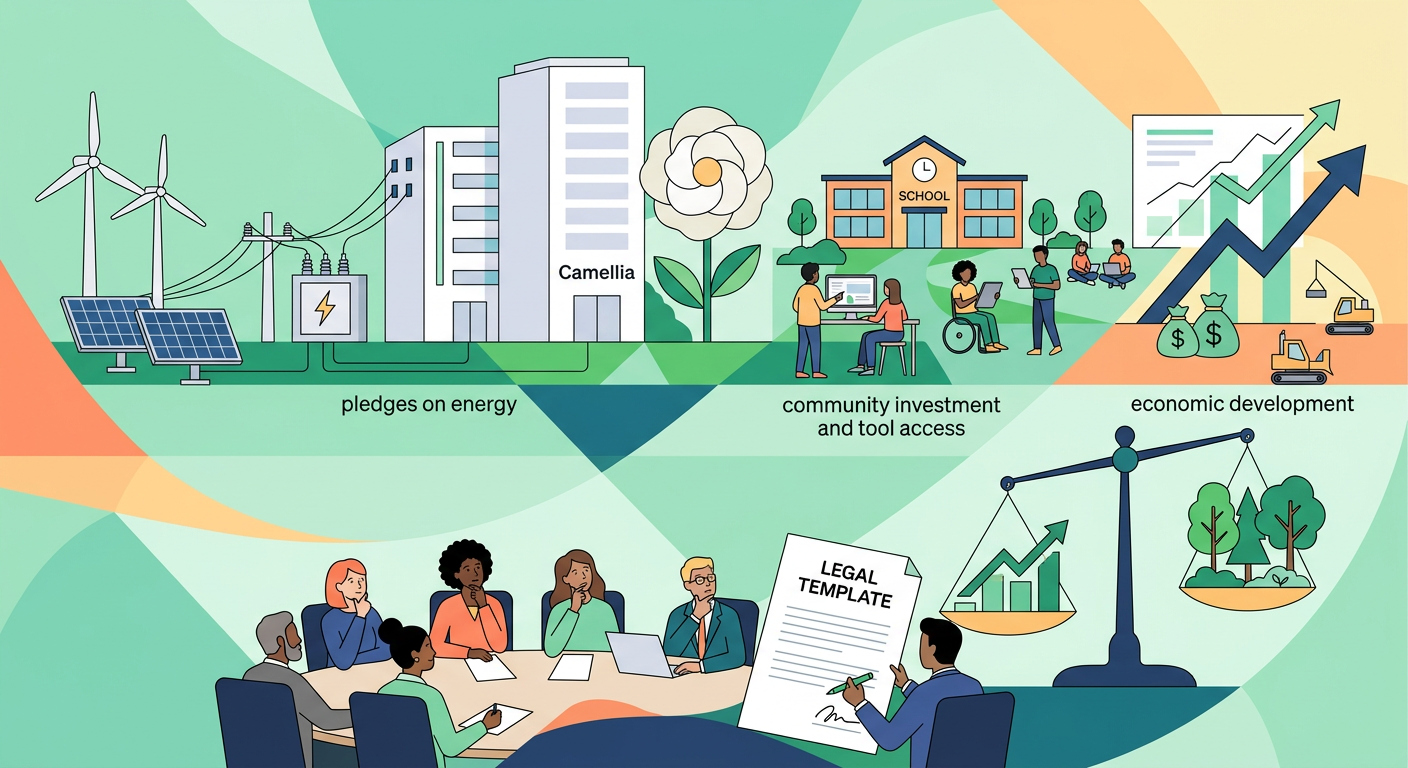
OpenAI's Project Camellia in Georgia exemplifies how AI firms are structuring physical expansion with pledges on energy, community investment, and tool access. The initiative highlights a trend of AI companies seeking favorable locations, while local policymakers face balancing economic development with environmental concerns. This voluntary framework may set a benchmark for future negotiations, though questions remain about its sufficiency compared to potential regulations.
OpenAI's Project Camellia: A Template for AI Infrastructure Negotiations?
OpenAI announced plans for a new initiative in Effingham County, Georgia, called "Project Camellia." Few specific details have been released, but the announcement highlights four pillars: responsible energy sourcing, community investment, job creation, and expanded access to the company's Codex tool. For those watching how AI development intersects with local governance, the project shows how large AI firms are starting to structure their physical expansion.
Effingham County, in southeast Georgia near Savannah, is not a traditional tech hub. Its selection points to a broader trend: AI companies are increasingly looking for locations with available land, favorable tax policies, and less strained power grids. Georgia offers those advantages plus a business-friendly regulatory environment. But large-scale AI infrastructure—especially the data centers needed to train and run models—often sparks local debates over energy use, water consumption, and workforce development.
OpenAI's "responsible energy" pledge likely addresses the massive power demands of AI compute clusters. The wording suggests the company may match energy use with renewable procurement or invest in efficiency innovations, but no specific targets have been disclosed. For local regulators, this is a voluntary framework that could precede formal mandates—some states have started requiring AI data centers to disclose carbon footprints or fund grid upgrades.
The "community investment" and jobs components are standard in economic development deals, but they matter more here because AI infrastructure is long-term. Data centers produce fewer permanent jobs per square foot than traditional manufacturing. OpenAI's mention of jobs probably includes both construction-phase employment and ongoing technical roles. The inclusion of Codex access is a novel element: offering local developers and institutions access to AI coding tools. That could be presented as a workforce training incentive, potentially justifying public subsidies by growing the local tech talent pipeline.
Policymakers should see Project Camellia as part of a larger pattern. As AI compute demand grows, companies face more scrutiny over the local costs of their facilities. Effingham County officials, like their counterparts elsewhere, must balance economic development with environmental and social concerns. OpenAI's voluntary commitments may become a benchmark for negotiations in other jurisdictions—trading community benefits for streamlined permitting or tax breaks.
It is too early to judge the project's long-term impact. But for industry observers, Project Camellia is a deliberate attempt to shape the narrative around AI infrastructure investment. By bundling energy responsibility, local development, and tool access into a single announcement, OpenAI signals a willingness to work with local stakeholders. The question for policymakers is whether such voluntary frameworks are enough—or whether stricter regulations for AI data centers will follow.
Read the original at openai.com →