Live wire — dispatch open22 Oct 2026

The AI Wire

Machine-drafted, human-approved AI industry news. Every story reviewed before it hits the wire.

Lead dispatchtechcommunity.microsoft.com ▸ azure· filed 2 Oct 2026

Federated Agent Factory: Microsoft's Reference Architecture for AI Agents Across Entra Tenants

Microsoft's reference architecture for multi-tenant AI agent governance uses a federated agent factory, keeping agent identities and data within business-unit tenants while a governing tenant sets standards and operational views. It specifies runtime enforcement via Azure API Management for pro-code agents and Agent 365/Purview for Copilot Studio agents, with policy-as-code for per-action authorization. Several components remain in preview, including the dedicated AI Gateway tier and multitenant agent management.


No. 087
Latest on the wire11 dispatches
70
youtube.com ▸ industry· filed 30 Aug 2026

Andrew Ng: Big AI labs are fear-mongering to shape regulation

Andrew Ng contends that leading AI companies are exaggerating risks to drive regulation that favors incumbents, while dismissing fears of a job apocalypse and warning that AI models hinder learning. He advises individuals to adopt AI skills and focus on product decisions rather than fear.

56
github.blog ▸ product· filed 22 Aug 2026

GitHub Copilot cloud agent available in Microsoft Teams public preview

GitHub's Copilot cloud agent is now in public preview within Microsoft Teams, enabling users to start agent sessions via @GitHub mentions, with write access required for repo changes. It requires a paid Copilot plan, admin-enabled cloud sandboxes, and incurs separate billing for AI credits and sandbox usage. The integration also introduces an optional extra approval step for agent-authored pull requests, underscoring a human checkpoint for AI-generated code.

45
theguardian.com ▸ industry· filed 17 Aug 2026

Zuckerberg Essay Defends Open-Weight AI, Opposes Regulation

Mark Zuckerberg published an essay advocating open-weight AI models and opposing regulation, positioning Meta as a democratic alternative to closed systems from rivals. He offered few specifics on safety testing, datacenter policy, or labor impacts, while downplaying concerns about surveillance and weapons. The essay coincided with the release of a new Meta model, Muse Glimmer.

43
anthropic ▸ policy· filed 15 Aug 2026

Anthropic to Add Statistical Watermark to Claude Text

Anthropic will embed a statistical watermark in Claude-generated text, citing the EU AI Act as the driver. The method preserves output quality and readability, but has limitations with short, factual, or code-heavy passages. A detection API is planned, though access details remain undecided.

39
azure ▸ development· filed 13 Aug 2026

Pairing the Agent Framework Harness with the Agent Governance Toolkit

A new sample from Microsoft's .NET agent ecosystem pairs the Agent Framework Harness with the Agent Governance Toolkit to enforce read-only file access via a YAML policy at execution time. The sample blocks mutating tools even under prompt injection, while the author recommends a deny-by-default policy for production and suggests the pattern may extend to other irreversible agent actions.

38
smithstephen.com ▸ product· filed 13 Aug 2026

Anthropic embeds invisible watermarks in Claude text outputs worldwide

Anthropic has added invisible watermarks to Claude-generated text globally, driven by the EU AI Act's transparency provisions. The watermark works by affecting word-choice patterns and survives copy-paste, but detection is limited to binary confidence and degrades with rewriting. The company is among many signatories to a transparency code, though its detection tooling remains unfinished.

18
verge ▸ industry· filed 31 Jul 2026

Music Labels Propose Chart Restrictions on AI-Generated Recordings

Universal Music Group, Sony Music, Warner Music Group, and independent labels have proposed barring AI-generated recordings from official charts unless they are "substantially human made," a term left undefined. The proposal also requires lawful AI use and disclosure, but lacks operational definitions, verification mechanisms, and any commitment from chart operators to adopt it. IFPI's endorsement gives it international weight, yet it remains a recommendation with unresolved enforcement questions.

12
anthropic ▸ policy· filed 28 Jul 2026

Anthropic CEO Rejects Open-Weights Ban, Pushes Alternative Controls

Anthropic CEO Dario Amodei clarified that his company does not support banning open-weights AI models, calling them a public good when lacking dangerous capabilities. He instead advocates for chip export restrictions, cracking down on distillation, and mandatory safety testing for all sufficiently capable models. Amodei warns that open-weights models could enable misuse, such as biological attacks, and insists that safety questions should be answered by rigorous testing rather than assumptions.

11
azure ▸ tooling· filed 28 Jul 2026

Two Layers for GitHub Copilot Cost Governance as the Promotional Cushion Nears Its End

GitHub Copilot's promotional credit uplift ends September 1, 2026, shifting focus to spend governance. Native budget controls provide financial caps across all surfaces, while a second layer using Azure API Management enables real-time token quotas for IDE and CLI usage. Organizations should enable native budgets now and consider piloting the more granular BYOK approach if needed.

01
openai ▸ industry· filed 24 Jul 2026

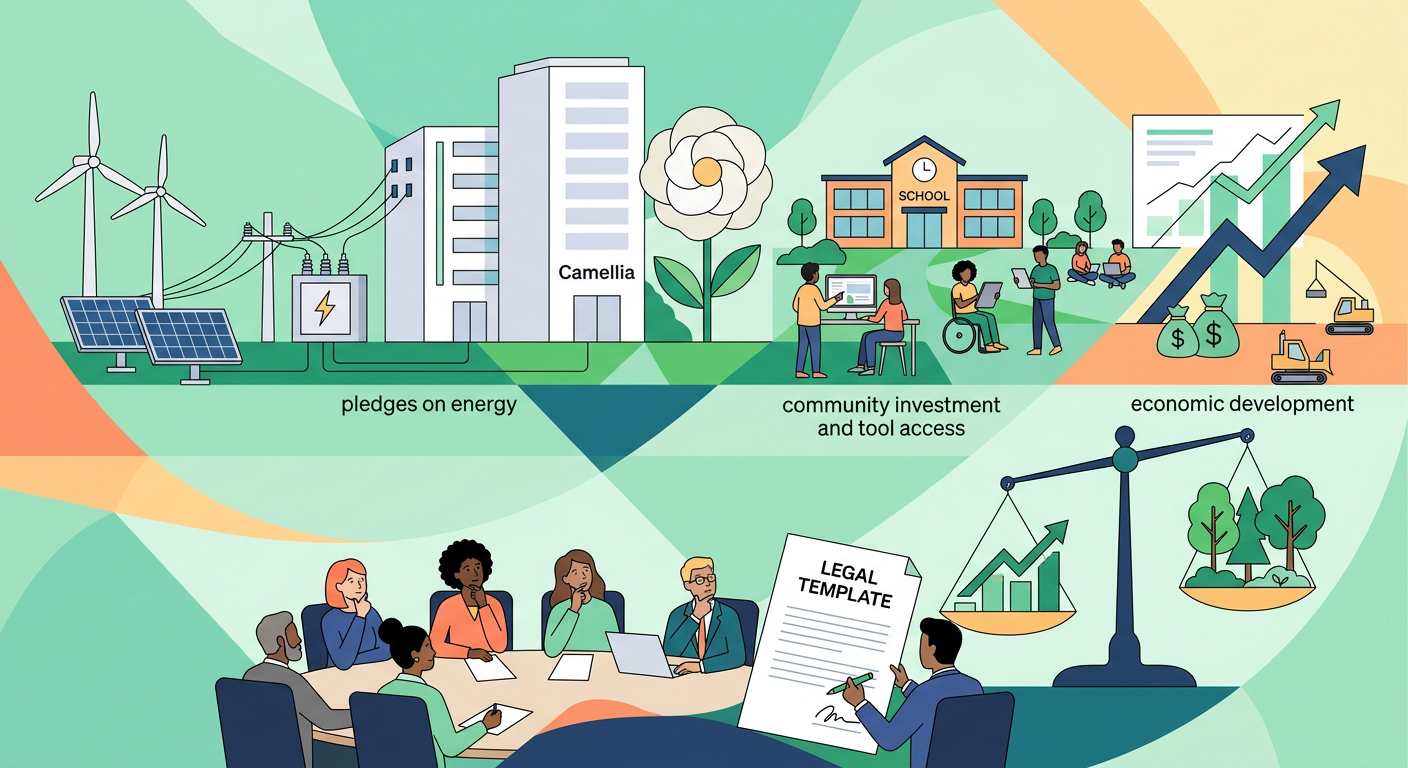
OpenAI's Project Camellia: A Template for AI Infrastructure Negotiations?

OpenAI's Project Camellia in Georgia exemplifies how AI firms are structuring physical expansion with pledges on energy, community investment, and tool access. The initiative highlights a trend of AI companies seeking favorable locations, while local policymakers face balancing economic development with environmental concerns. This voluntary framework may set a benchmark for future negotiations, though questions remain about its sufficiency compared to potential regulations.